
international thief thief.
Exploring the concept of Neo-colonialism and Africa’s failed struggle towards independence.

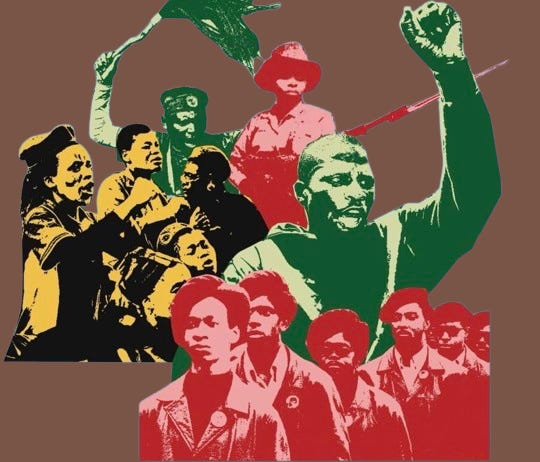
this essay tackles the concept and history of neocolonialism, however i am aware it’s a very complex and textured topic a few paragraphs on substack could only aim to cover. i have only written on pieces of information i’ve gathered and that has stuck with me over time so, expect (although i hope such is not the case) a bit of historical and political inaccuracies of any sort . thank you for reading.
“If the leader of your country is not referred to as a dictator by the West, he is not the one leading that country.”
I cannot remember where exactly I heard this quote, but like a hammer striking on nails, those words left a mark in my mind, stayed with me as I wrote them out in my notepad and resonated as I reread them over and over.
Somehow, it all began to make so much sense. The bad governance, the constant economic regression, the prioritisation of exporting our natural resources with no evident returns.
There is no doubt that Africa has been plagued with bad leaders, people who are more interested in filling their pockets and buying private jets than the people they are meant to govern. This is undeniable—yet, we have to look at this more introspectively; we have to observe the strings of Western imperialism latched on the shoulders of those meant to represent our interests. Those who’d given us this illusion of freedom, who’d shaken hands with us, and withdrew themselves from our lands, but they’ve always been there. In fact, they’ve never given us that independence we desperately fought for after the conclusion of the Second World War, and like a thief in the night, they continued to contribute to our endless suffering.
This essay explores our colonial past and neo-colonial present, the illusion and lies we’ve been fed on a silver platter for the globalization of the West, the historical figures that have been constantly put down for resisting their control, how this affects you, sitting back at your screen, and ways you might be able to reclaim your future.
Colonialism and the carving up of Africa into different regions for African control.
Long before the Europeans brought their missionaries and bibles into African lands with the pretence of sharing the gospel of the Lord, Africans were faring very well on their lands.
One could even argue that they were prosperous but would never hear such narratives from the mouth of the coloniser. They had developing kingdoms, like the Benin Kingdom, the Oyo Empire, Dahomey, the Sokoto Caliphate, etc., which had expanded territories and built technology way beyond European understanding. As British historian Basil Davidson quotes in his book The Lost Cities of Africa “Long before the first European set foot in Africa, there were civilizations with laws, arts, religions, commerce and cultures as advanced as any in Europe.”1
Thus the narrative that Africa was a nation that was in need of “saving” due to it being a primitive society is nothing less than coloniser language and gratification of this saviour mentality.
However, in the year 1884, in Berlin, Germany, European leaders picked up a pencil and carved up the continent into different regions, setting imaginary borders and claiming ownership. Being a continent vast in natural resources (oil, minerals, gold, diamonds, etc.), it was the perfect capitalist venture, as these powers held control of the land as well as its people.
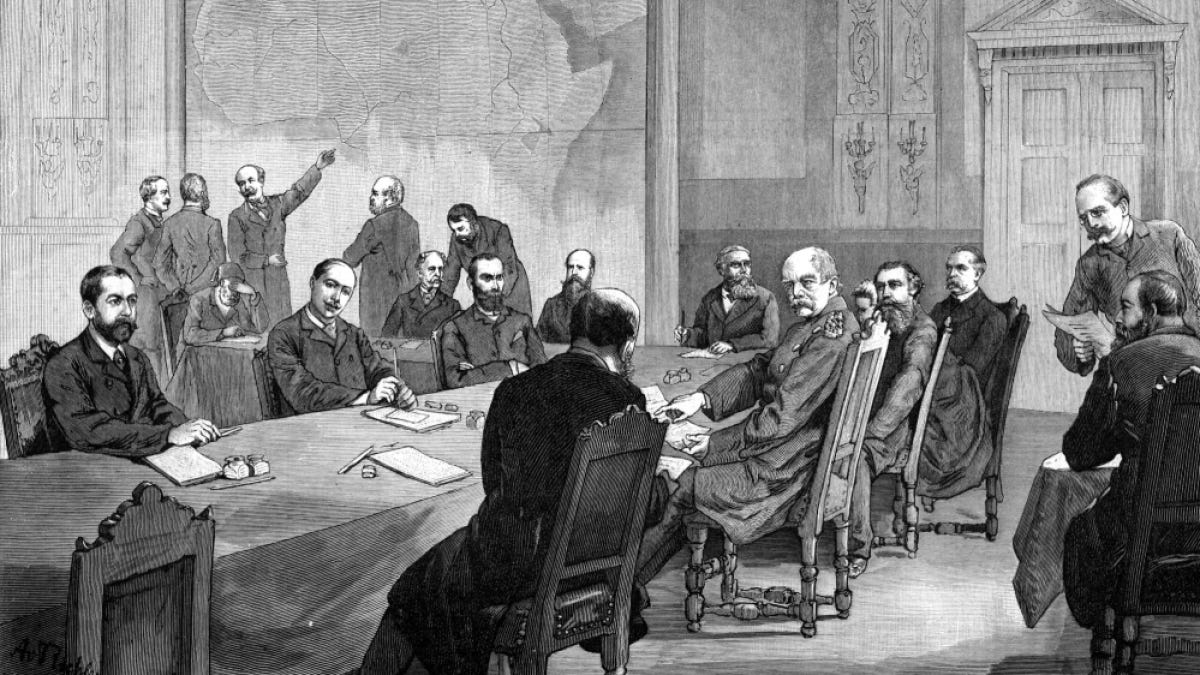
“Colonization=thingification. The colonized person is reduced to a thing, a number, a tool.” Aimé Césaire writes in the memoir “Discourse on Colonialism”, and his words are the reality of how African people were turned into tools for producing these natural resources that were now exported into European territories. Due to this cause, we witness the total extermination of the Rwandan people, the dehumanization of the people of the Democratic Republic of Congo, the apartheid in South Africa and so many more tragedies.
But they’d only come to spread the gospel, to preach to the natives of these lands, but as Chinua Achebe expressed, “The white man is very clever. He came quietly and peacefully with his religion. Now he has won our brothers, and our clan can no longer act like one.”2
The Struggle for Independence
Unrest raged in the West. There was a war. A war on fascism, on authoritarianism and on the threat Nazi German leader Adolf Hitler posed to the world. The colonisers relied on their colonies not only for providing support and resources but also for military personnel when they were short on soldiers. After the conflict, most of these soldiers were never rewarded for their efforts in the battle as promised, firstly fighting in Abassinya, now modern-day Ethiopia, and later on contributing to the Pacific War in Burma, now modern-day Myanmar, with the Japanese forces.
It is during these times we witness a rise in African nationalism and the call for independence. Enough was enough, and it was time for Africans to claim their lands for themselves. Although, in some countries, these transitions were done peacefully (Ghana, Nigeria, etc.), in most cases, freedom was achieved through bloodshed.
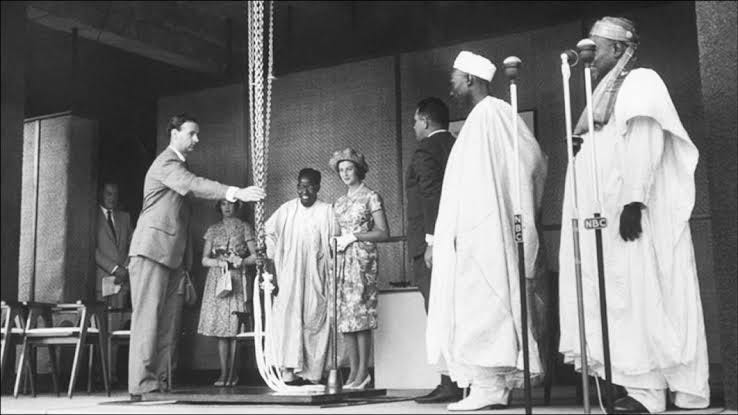
Algeria, a nation residing in the northern parts of Africa, was a territory ruled by the French for over 130 years and was even regarded as a part of the country. However, the Front de Liberation Nationale, also known as the FLN, launched a violent rebellion against colonial rule. Frantz Fanon, one of the partakers in this call for revolution, wrote, “ Decolonization is always a violent phenomenon. It is quite simply replacing one species of men by another.”
The fight for ownership of their lands was met by brutal crackdowns, bloodshed, death and torture. In 1962, after eight good years, Algeria was granted independence from the hands of the French colonists through the Évian Accords and a national referendum. Although the battle had been won, there was no ignoring the blood that drenched the lands of Algeria as a result of wanting to reclaim what is rightfully theirs.
Another instance of this is the country Angola. Ruled by the colonial entity of the Portuguese, Angola’s call for independence did not come easy. With a war that lasted nearly two decades, the Portuguese were not willing to let the Angolans have the right to their lands. As one of the liberation leaders, Augustino Neto writes, “The colonialists pretend to bring civilisation. But their civilization is death, and ours is freedom, won through fire.”3 After the Portuguese revolution in 1975, Angola gained its independence.
These examples are just two of many countries that fought tooth and nail to reclaim their lands, but the question still remains: have we truly been granted independence, or is that all an illusion for the application of a quiet yet more brutal form of oppression?
The IMF, the World Bank and the Rise of Neo-Colonization
Kwame Nkrumah, Ghanaian Pan-Africanist and leader of the Conventions People’s Party, coined the term ‘neo-colonisation’ in his book The Last Stage of Imperialism. He defines it as the concept to be “based upon the principle of breaking up former large, united colonial territories into a number of small, non-viable states… incapable of independent development.”4
He called it, figuratively, the last stage of imperialism, and in simple terms, it is the economic domination from external powers over other territories, with no military or political force or control. It is a means in which foreign capital is used for exploitation rather than development of the less developed parts of the world, and the most dangerous part about this force is that it’s quiet; it does not announce itself like the past colonial force did. Instead, it preys on vulnerability and exploits the African people.
The African lands have gotten what they wanted. Independence. They now have control, but it is no easy thing taking over rulership, so once again the coloniser comes with a means of help. This one seems less dangerous this time; its exploitative intent is a bit less subtle, and it seems like they genuinely want to render help. The International Monetary Fund started up in 1945 after the end of the Second World War to help developing nations grow their economy with definitive conditions, as well as measures by which they would pay back, the same as the World Bank. On the outside it seems just like any loan. Who would have thought that such a harmless notion was what was going to lead to Africans’ downfall and thus the rise of neo-colonialism?
When we borrow money from these organisations, they set criteria to control these regions economically through tonnes and tonnes of debt, structural adjustment programmes and privatisation mandates. They set a definitive that forces African countries to devalue their currency, thus keeping the prosperous continent filled with vast natural resources to remain poor. Kwame also helps explain, “The state which is subject to it is, in theory, independent… In reality, it’s an economic system, and its political policy is directed from outside conditions: devalue your currency, privatize state industries, and cut social spending.”
In essence, neo-colonisation forces these countries to remain dependent on imperialist powers even after decades of independence. Which forces us to believe that the freedom we think to have gotten never existed in the first place. And trust me when I say it doesn’t end there.
The Rise and Fall of Gaddafi
Muammar Gaddafi seized power in Libya in 1969 through a military coup that overthrew King Idris I, a leader widely seen as a puppet of Western powers. With him came a vision that combined Pan-Africanism, Islamic socialism, tribal democracy, and economic independence, which served as a direct challenge to Western imperialism and global capitalism. His political philosophy was outlined in The Green Book, in which he rejected traditional Western political models, advocating for a “state of the masses” where ordinary citizens would govern through local councils.
The authority of the people is stronger than imperialism. Imperialism will disappear when the authority of the people is established everywhere.: — Muammar Gaddafi, The Green Book, Part I: The Solution of the Problem of Democracy: ‘The Authority of the People’ (1975).
Gaddafi pushed for a United States of Africa and promoted the idea of a pan-African currency that could rival the U.S. dollar. Naturally, these ideas weren’t well received by Western powers, who then went on to label him a terrorist. NATO intervention in 2011 led to his brutal assassination, leaving Libya in shambles. Today, a country once prosperous under said “terrorist” faces human trafficking, armed militias, and economic collapse, a grim reminder of what African independence and self-determination can face under external interference.
The Pride Of Africa
Ruled by King Leopold II of Belgium during colonial times, Congo was—and still is—a country filled with immense deposits of cobalt, gold, diamonds, uranium, and other minerals. Currently, even in the midst of an ongoing genocide funded by Rwanda, it still has over twenty-six billion dollars’ worth of untapped wealth. Under Belgian rule during the rubber boom, Congo’s wild rubber was highly sought after, and as a result, impossible quotas for rubber production were set for the villagers. To set an example, if one did not meet the quota, hands were cut off.
However, King Leopold had framed Congo to be a land of freedom.
Years later, leading to the 1950s, we see a rise in Congolese nationalism. This is where we meet Patrice Lumumba, a pan-Africanist who sought for the prosperity of his land beyond European control. However, such ideas would then lead to his early demise.
Men and women of the Congo, Victorious independence fighters, I salute you in the name of the Congolese government.” “We have known ironies, insults, and blows that we endured morning, noon, and night because we were Negroes.” “We have seen our lands seized in the name of so-called laws which recognized only the right of the strongest.” “We are going to show the world what the black man can do when he works in freedom, and we are going to make the Congo the pride of Africa.” “Our wounds are too fresh and too painful for us to drive them from our memory. Independence is not granted; it is conquered.” “Together, my brothers, we shall begin a new struggle, a sublime struggle that will lead our country to peace, prosperity, and greatness.
Lumumba’s Independence Speech June 30, 1960.
After Congo’s independence in 1960, Lumumba was made the Prime Minister. However, sadly, it was thrown into chaos soon after, also known as the Congo Crisis. Desperate for help after the United Nations had turned him down, he sought the Soviet Union and was thus seen as a threat in the eyes of the West, especially since it was during the Cold War. Later on, he was removed from power, and Congo was soon overthrown by a Western-backed military coup.
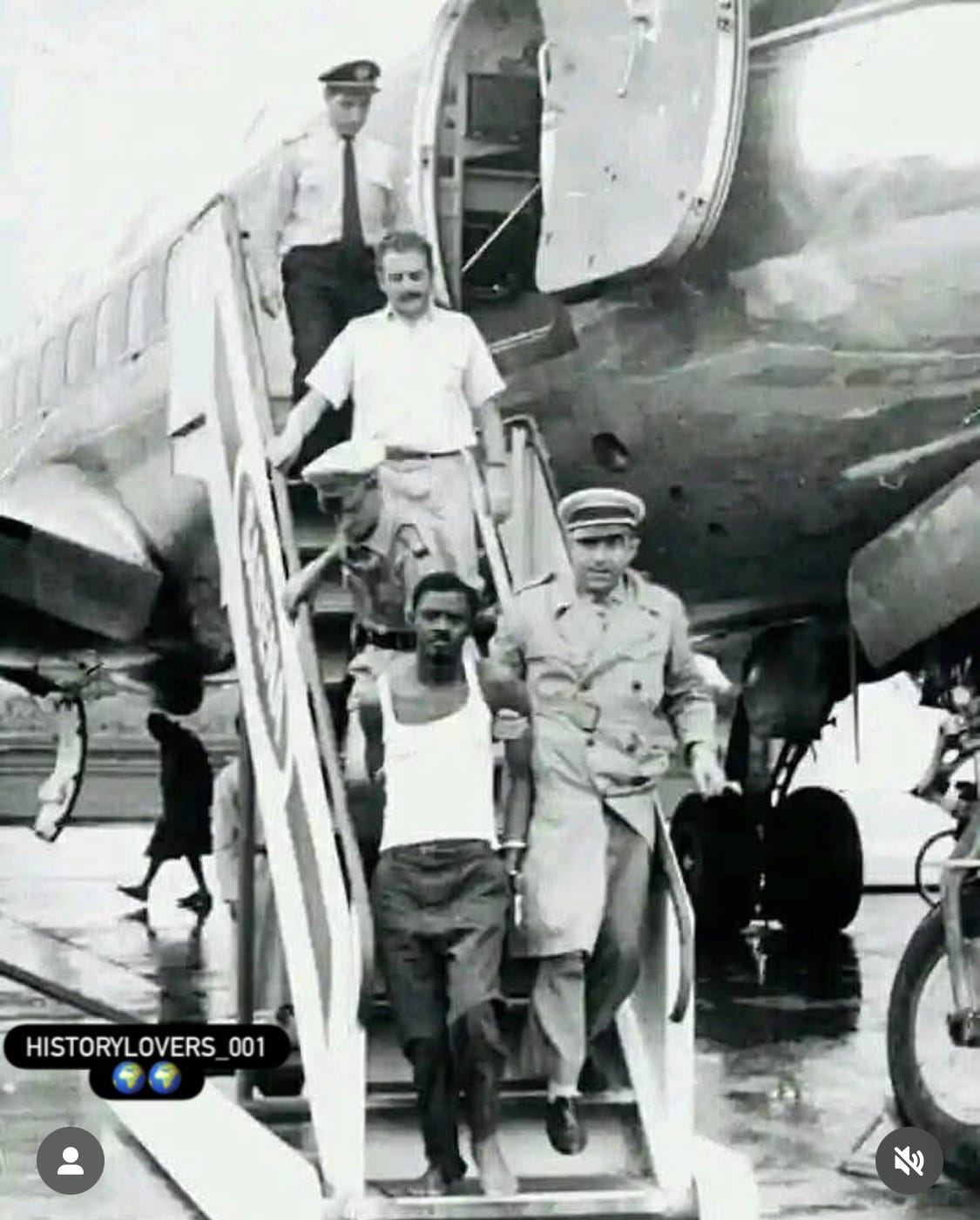
He was then captured, beaten to death and killed by firing squad under Belgian supervision. His body, as well as that of his aides, was dissolved in acid to hide any evidence of involvement. He was only 35.
He had preached for total sovereignty of the resources of the beating heart of Africa. Now the heart bleeds out with conflict, insurgency and strife for the exploitation of cobalt, uranium and much more.
Thomas Sankara
In the year 1983, Thomas Sankara rose to power in Burkina Faso—formerly named Upper Volta. His political and economic reforms were influenced by Marxist-Leninist principles and Patrice Lumumba, as well as other pan-African leaders. Shankara envisioned a future for Burkina Faso beyond Western control. He had rejected all IMF loans and foreign aid, aware of their damning economic and political conditions, as he had famously said, “He who feeds you controls you.”5
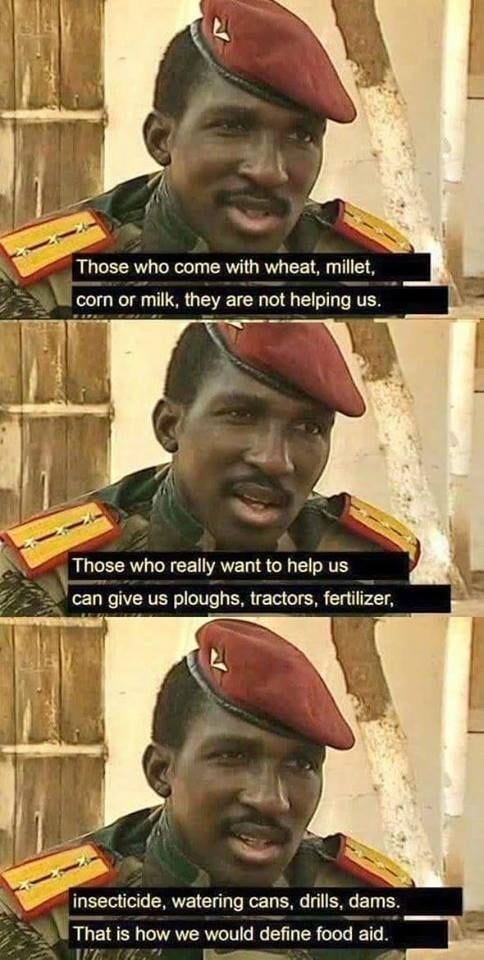
His ideologies upset the imperialist he oftentimes condemned. Although his death is not directly linked to the West, it was still influenced by it. He had pushed for Africa’s self-reliance and the abolishment of internal inequality. He’d also called out the leaders who were keeping shut as their lands were being slowly exploited under the pretence of aid. As a result, the soldiers under the command of what was meant to be his closest companion shot him. However, his ideas still live on till today.
A reoccurring motif that continually spells out the idea that they need us to build their own prosperous nation and will use whatever means to hinder us from being fully independent.
In addition, we also have proxy wars and Western-backed political insurgency, as well as leaders who represent the interests of the imperialist rather than that of their citizens.
However, neo-colonialism isn’t only limited to the West but also other foreign powers who express economic dominance over developing countries for the purposes of also gaining access to Africa’s natural resources in addition to other factors. This can be observed in countries like China and the UAE with their economic and political influence in African countries.
Our Silent Leaders
Neocolonialism is not only internal. What do we have leaders for? Unfortunately, most of them have been incredibly complicit when it comes to addressing neo-colonialist policies for whatever economic, political or personal gain.
It is here that we have figures like Ouattara of Côte d’Ivoire, who is an ally of the French and allows them to have total control of its cocoa trade. Ruto of Kenya and Bola Ahmed Tinubu of Nigeria. Their silence, as well as constantly collecting aid with there being no reflection in their countries, erupts with inflation and economic unrest, spiking protests.
Despite being fully aware of what aid and foreign partnership do to our own currency and our resources, this is only to show that the people in power also bend to the tune of these imperialists and are the main reason why our fight for freedom seems all for naught.
How this influences our present
A few days back Donald Trump announced Nigeria as a country of major concern due to the killing of Christians in the northern parts of the country. This began to spark a lot of political discussion online about the intention of the president—although it would take nothing but a Google search to know he means nothing but harm.
However, it is framed in such a way that makes it seem like he is truly concerned for the country and wants to end extremists (which his government funds, by the way), but this is just another chapter of the same playbook. It has been done countless times all over the world. Coming into another man’s land with a promise of help and prosperity and then destroying them from the inside out.
However, I do see some Nigerians seeing Trump’s involvement as some sort of ‘messianic’ work. One had even called him a true man of God for coming to ‘save’ the Nigerians. But in truth, the white man cannot come and save you, nor does he have your best interest at heart. The last time they’d come to bring us to salvation, our lands were uprooted from under our feet and brutal whips tore through our backs.
As I’d also expressed in my essay “and The Talking Drum Went Silent”, it might be hard for us to decolonize our minds coming from a society of people who have recognized anything affiliated with being African as demonic, who would rather the white man come back to colonize us rather than demanding accountability from our government. Such a mindset makes it easy for neo-colonial powers to find their way in without guns or soldiers, but with a smile, a handshake, a paper, and a signature that steals away your future.
We’ve also been plagued by puppet leaders who simply do not care, because they do not dance to the demands of the people they are meant to represent, but those who put but some extra cash in their pockets. They have sold us completely for a couple of dollars and a life of infinite luxury.
Then, what’s next?
Africa’s path to true independence requires reclaiming control over its resources, rejecting neocolonial influence, and holding leaders accountable. We need to make an active effort to decolonise our minds and break free from these shackles of oppression. As we demand good leadership, let’s also instil the narrative that our oil reserves and our coal and our diamonds and uranium are for Africans and Africans only. Our destinies should not be defined by external bodies. Our means of livelihood should not be thrown away for the betterment of others.
It is only through this that maybe we can truly become free.
The Lost Cites of Africa, Internet Archive: https://archive.org/details/lostcitiesofafri00davi/page/359/mode/1up?
Things Fall Apart, Chinua Achebe.
Agostinho Neto, “The Grieved Lands of Africa,” in Sacred Hope (London: Heinemann, 1982)
Kwame Nkrumah, Neo-Colonialism: The Last Stage of Imperialism (London: Thomas Nelson & Sons, 1965), Introduction, pp. ix–x
Thomas Sankara, speech at the Organization of African Unity Summit, Addis Ababa, July 1987.
This write up provides concrete evidence that these westerners hate us because they know what we would be and do if we had Right “terrorist” leaders who could rid us from this shackle. We would be so much ahead. I don’t understand the need to submerge and exploit other nations to keep yourself relevant. And God, they do it so well.
Thank you so much for giving these people that fought for Africa im ways they could, their voices again. Even in death, it is good to know that many people will continue to hear of what they fought for so thank you for being a medium.
The Trump situation, I know not much but deep in my hearts I continually question- why Nigeria? Why is he coming to “save” us? What of Congo? Sudan? It just doesn’t make sense. (Yes, I know Christian’s are being killed but why is Trump coming to save us? It doesn’t add up!)
This was such a good read. The story of the assassination of Thomas Sankara will forever send chills down my spine because this was someone who knew what it meant to decolonize. He knew freedom wasn’t realizable without the freedom of women. The audacity to change his nation’s name from the one imposed on them by the colonizer’s to a new name, was one to admire.
Thank you for writing this!