
the misogyny in language.
examining how the words used to define women's abuse still help uplift patriarchal narratives.

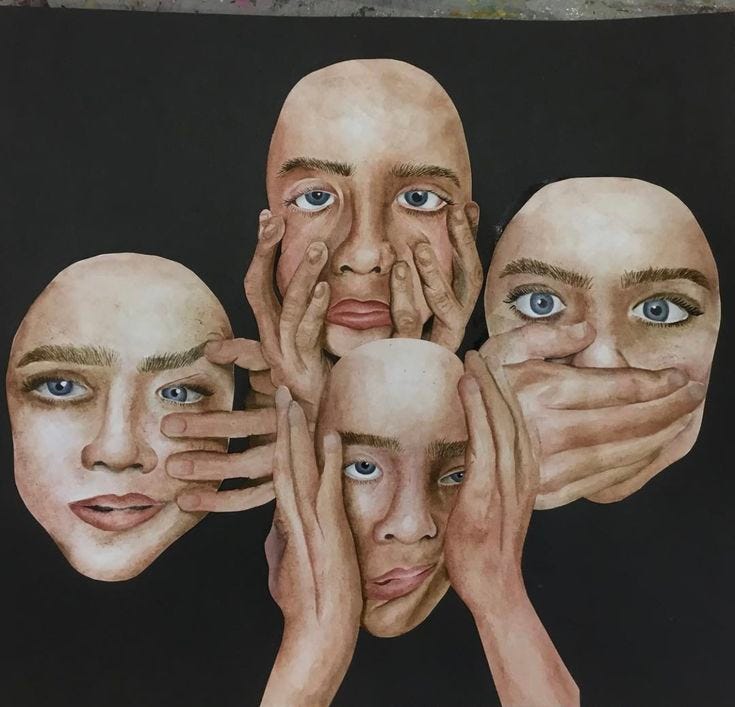
It's not a novel discovery that the patriarchy and its ideals have heavily influenced our language and how we express ourselves, especially regarding matters about women. There's the use of “Miss,” “Ms,” and “Mrs,” which place women in categories based on their relationships with men. Or how “man” has been agreed upon as the default when addressing human beings.
It has often been used as a weapon in silencing women too. Take, for example, the word hysteria. Gotten from Greek origins, it literally translates to a disease of the womb, and in the 19th century, it was used as a diagnosis for women's emotional and sexual distress. It still paves itself into modern language as a means to shut down women's frustration with the simple sentence; she's just being hysterical!
The words that we use to express thought are still heavily influenced by the system we uphold, and as a result, are a determinant when it comes to explaining women's oppression.
Language helps shape thoughts and ideals. So, when it comes to examining the harm done to women, the words we use matter.
This topic piqued my interest when observing the way certain news outlets would define cases like rape or assault. Instead of mapping words in a way that sheds light on the issue, their choice of diction rather reinforces patriarchal stereotypes.
I also say this in the wake of Ochanya’s case, as well as many more cases of child abuse and molestation. Oftentimes, words like “defiled”, “slept with”, “had sex with” are mostly used by media outlets and even people themselves to describe what had happened. Rarely do you hear the case for what it is: “rape.”
I have come to believe that this is inherently dangerous, as it removes blame and accountability from the actions of the perpetrator, and still puts its focus on either the victim's purity, as well as eroticizes and sexualizes the violence.
We do live in a society in which our systems and religions have dictated what it really means to be an ideal woman, and part of this is keeping ourselves pure and untouched until a man does the violating. Furthermore, we also come to see sex as something that is done to a woman, whether consensual or not, a part of their womanhood has been stripped away.
As a result, such lexicons still help uplift patriarchal narratives of women's bodies, despite trying to train focus on the issue at hand; seeing it as a means of possession, her purity to be ruined and taken by the hands of men. It instills an idea in people that, despite the horror that has transpired, the victim's purity and sexual status are still of most importance, thus pegging them with shame at losing something that is nothing less than a social construct.
I was watching popular Tiktoker Peller talk about Ochanya's case, and although I am not supposed to take anything he says with relevance, he’d stated and I quote, “I hear of the story wey them give that girl…” The use of words struck me. Again, knowing the sort of individual Peller is, I should not have taken any heed, but Ochanya was not given anything, and nor was the act carried out on her consensual in any way. They’d raped her.
It often seems as if we're scared of using such a word, and try to soften it to shift, remove accountability, and completely erase the violence done.
Language shapes who holds societal power and with it being men, such tragedy still runs deep in different grammatical gender systems all around the world. As much as we want to decenter men and the patriarchy, we still speak in a man's voice, and make use of the male perspectives when it comes to expressing and identifying who we are.
As a result, caution needs to be taken regarding the words used to define women's experiences—not only those centring violence, but in all forms to rewrite our stories, and give ourselves a narrative beyond the ones the system has already decided to construct for us.